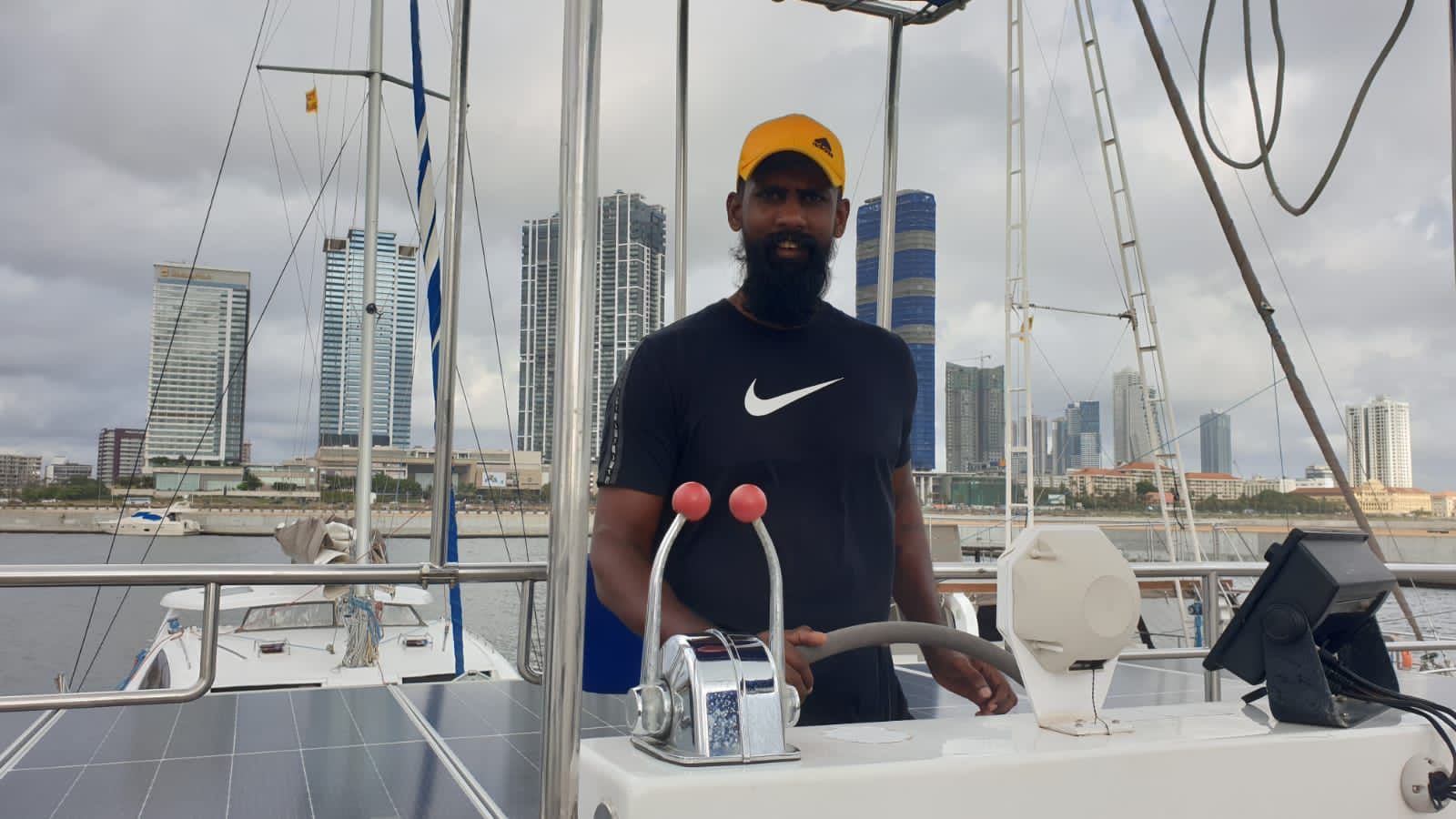
Bentota – all Sri Lanka – Champaka Gunawardana -russian speaker tour guide
Do you want a great holiday without the disappointment?
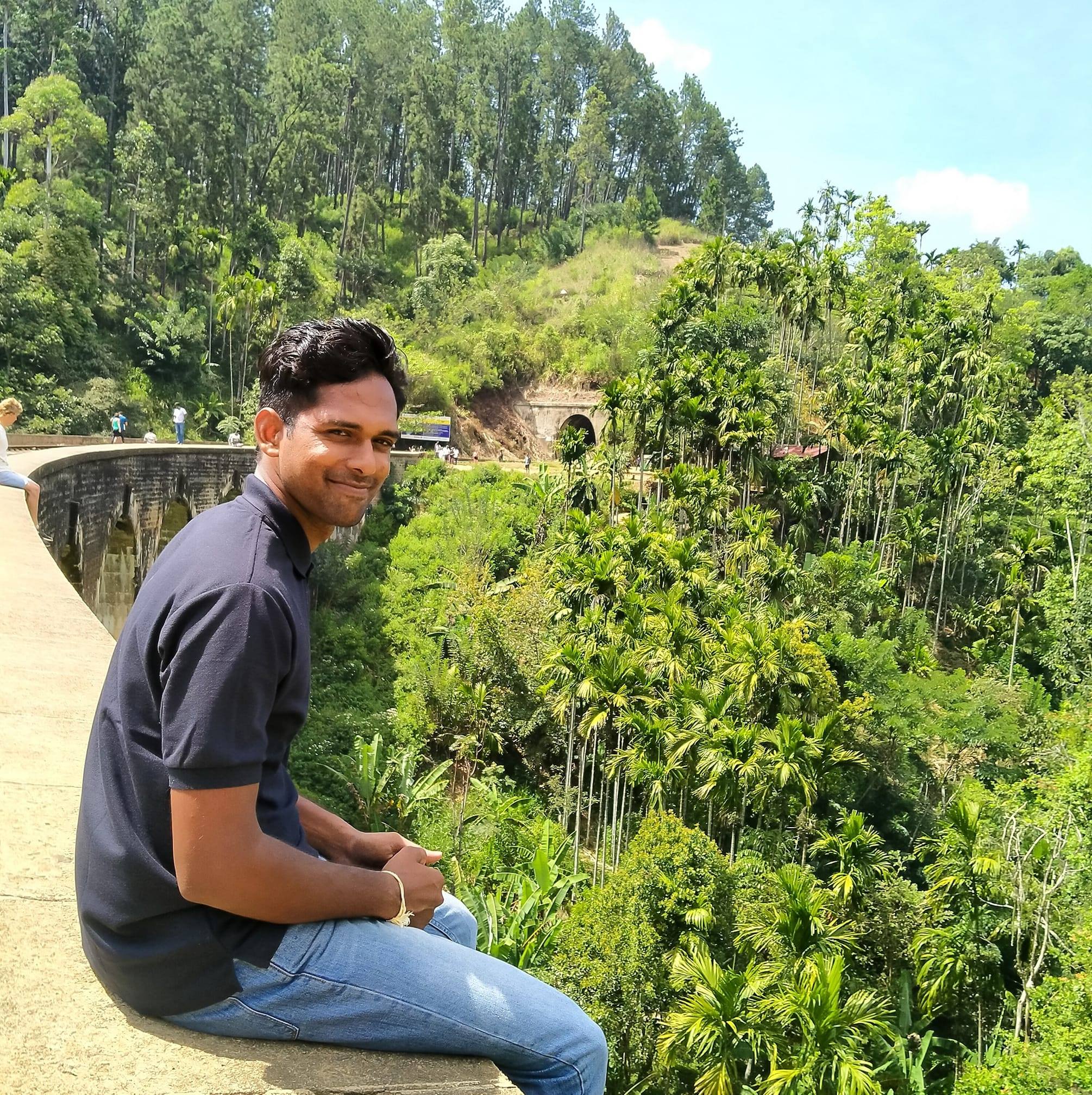
Champaka is one of the best! Great organizer and russian speaking tour guide in sri lanka.
Born and educated in Sri Lanka, he studied at Voronezh State University for tourism for 5 years and is now a Sri Lankan licensed russian-speaking national tour guide island
He has 5 years experience as a guide in Sri Lanka and has many stories to tell his tourists about the the country and it’s history, traditions and customs of the people.
The tours can stat at the air port or your chosen location.
He organises the tours himself and leads you to all the beautiful corners of our island.
Prices are very competitive and he invites everyone to go on an exciting tour with him.
Whatsapp or call +94 75 9087164
Вы хотите прекрасный отдых без разочарования? Пожалуй! Я лучший организатор и гид на Шри-Ланке. Я учился в Воронежском Государственном Университете на специальность туризм 5 лет! Сейчас я лицензированный русскоговорящий национальный гид по всему острову ?? Я уже работаю гидом 4 года. Я всегда готов рассказать моим туристам об истории, традиции и обычаи нашего народа. Сейчас на Юге Шри-Ланки сезон начинается. Я сам организую туры и буду водить прекрасные уголки нашего острова. Мои экскурсии пока дешевле чем других. Я приглашаю всех поехать увлекательный тур со мной!
? Моим подписчикам 10% скидка на экскурсии, сафари, наблюдение китов и дельфинов и речное сафари!❤️?
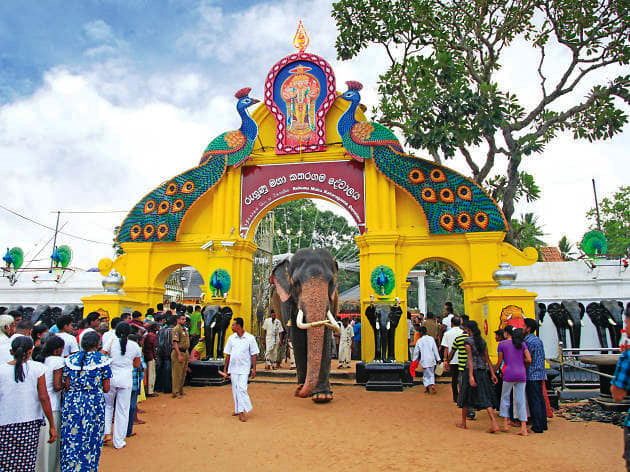
Kataragama temple is located in Sri Lanka, Kataragama town. Kataragama temple is dedicated to the Buddhist guardian deity Kataragama and Hindu god Murugan. It is one of the few religious sites in Sri Lanka which is venerated by Buddhists, Hindus, Muslim people. In past, it was a jungle shrine very difficult to access but today it is accessible by an all-weather road. The shrines and nearby Kiri vehera are managed by the Buddhists. The shrines of Teyanai and shiva are managed by the Hindus and the mosque is managed by Muslims.
The Shrine has for centuries attracted Tamil Hindus from Sri Lanka and south India since the latter half of the 20th century. The site has risen dramatically among Buddhists who today constitute the majority of the visitors. The cult of Kataragama deviyo has become most popular amongst the Sinhalese people. A number of legends and myths are associated with the deity and the location which all are differing by religion.
The priests of the temple are known as kapuralas and it is believed to be descended from the Vedda people. Veddas also have a claim on the temple. Nearby mountain peaks and locality through a number of legends. The temple complex is also connected to other similar temples in the eastern province which is dedicated to the Murugan. In the south of the island, Arunagirinathar traversed this pilgrimage route in the 15th century. The entire complex was declared a holy place by the government of Sri Lanka in 1950. Then political leaders have contributed to its maintenance and upkeep.
History
There is a number of the legend behind the origin of the shrine. As per Heinz Bechert and paul younger the mode of veneration and rituals are connected with the Kataragama deviyo is survival of Vedda mode of veneration that was preceded by the arrival of Buddhist and Indo-Aryan culture in the last centuries BCE. Hindus, Buddhists, and even Muslims have tried to co-opt the diety.
As per s.pathmanathan, the original Kataragama shrine was established as a guardian deity shrine to Skanda-kumra within a Buddhist temple complex. Then this shrine becomes idealized as a very spot amongst the local Tamils and Sinhalese.
Different Evidence for Kataragama Temple
Literary evidence:
The first literary mention of Kataragama in the context of a sacred place to kanfha-murugan in the 15th-century poems of arungirinathar.Traditions clams that he visited the forest shrine before he composed the poems.
Archeological evidence:
The temple has a number of ancient ruins and inscriptions. Based on dated inscriptions found nearby the Kiri vehera is believed to have been built or renovated around the 1st century BCE.
Festivals
The festivals and daily rituals do not base on standard Hindu or Buddhist rituals. Which follows the Paul younger calls as ancient Vedda traditions of worships.
The main festival is known as Esela perehera. This festival is celebrated during the months of July and August for about 45 days.
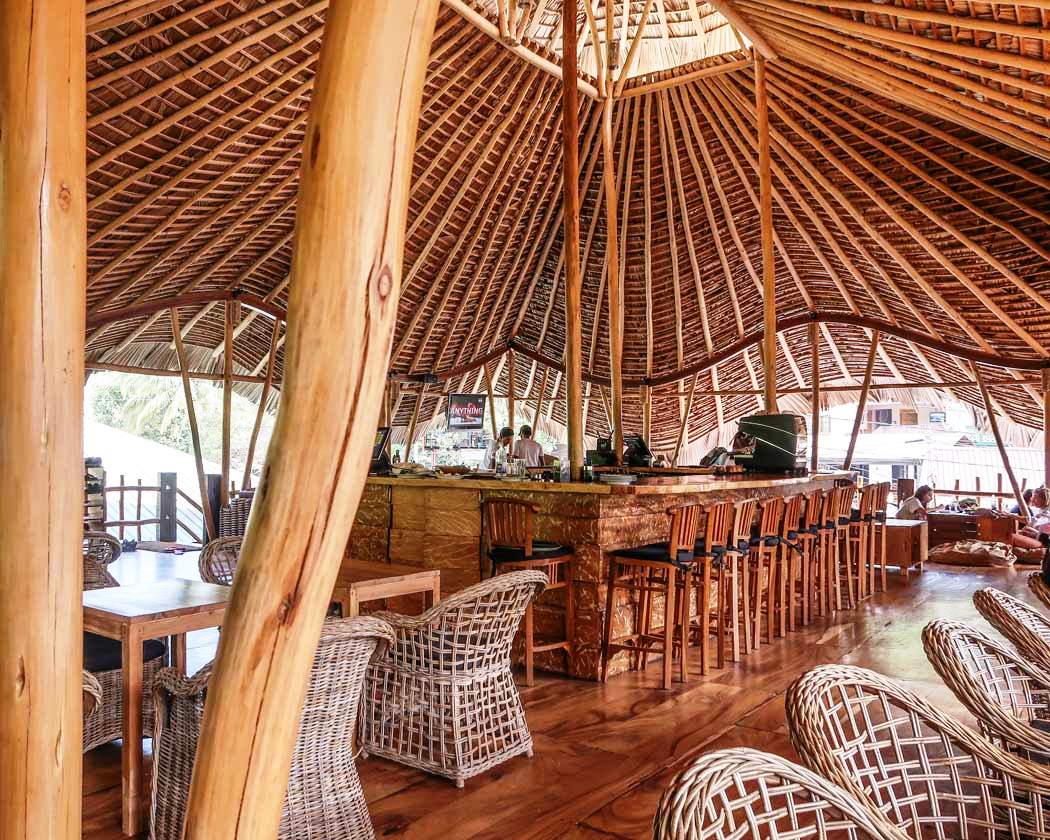
The food was of a high order and prices were reasonable – in fact very reasonable when you consider this is a “top Spot” for tourists in Sri Lanka. When we say “tourists” it should be mentioned that both foreign and local tourists were in abundance – with everyone enjoying the cool vibe and delicious food.
We asked our waiter if we could make a youtube whilst he was explaining the menu items, of course he said yes with a big smile. Ten minutes later we had posted the video and then the chef came out and asked us to tour the kitchen and make a Chill Kitchen youtube ! All in all this is a great venue to eat good food, enjoy a drink and sit on the veranda whilst watching the world go round – awesome times!
At the end of the evening we called our accommodation owner Mr Shan, ten minutes later he arrived in his tuktuk and took us “home” to Lavendra Paradise for a good nights sleep – again awesome!
Constructed between 1967 and 1969, the Bentota Beach Hotel is one of architect Geoffrey Bawa’s most important works. It is an iconic example of Bawa’s architectural style during the 1960s, as well as the critical model for hotel design in tropical climates during the decades following its construction. The resort is notable in that it successfully caters to a predominantly foreign clientele, meeting specific expectations in terms of desired services and amenities, while still respecting and representing the local culture in which it is set. The building was commissioned by the Sri Lankan government, which operated many resorts and hotels in the country during that period.
The hotel is located on a unique and picturesque site between two beaches in Bentota, a sixty-kilometer drive south of Colombo, Sri Lanka. The site is to the immediate southwest of a major bridge that crosses the Bentota River as it passes within 200 meters of the Indian Ocean, creating a long and narrow spit of land to the northwest of the site. The Colombo-Galle highway, the road that crosses the Bentota River via the steel-frame bridge, bounds the hotel property along its eastern edge. The western edge of the site is defined by the coastline of the Indian Ocean, and the north by that of the Bentota River. The grounds of the hotel are approximately 370 meters wide east to west and 250 meters long north to south.
The central building of the hotel is located atop an existing sand mound that was previously the site of a colonial Dutch fortification. The building is square in plan at the first level, excepting a trapezoidal extension of the northern gallery beyond the eastern edge of the square. This projection contains service spaces for the adjacent public areas of the resort, out of the way of the principal guest circulation and major ocean views. A simple ring of galleries surround a large open central courtyard, the entirety of which is occupied by a large rectangular reflecting pool. The pool occupies approximately one quarter of the floor area of the first level, and it is located just southeast of the center of the plan in order to increase the relative size of the ocean-facing northern and western galleries. Planters scattered as islands within the central pool provide space for large trees to grow within the courtyard. The leafy canopy of trees shades the central open space and defines the ceiling of this calm interior room.
The second and third levels are each L-shaped, located atop the north and west galleries of the first level. The second and third levels are narrower in plan than the galleries of the first level, yet Bawa elevates the floor plane of the second level above the pitched roof of the first level such that the second level to appears to cantilever over the roof of the first. In turn, the balconies of the third level cantilever beyond those of the second level. This building profile, reminiscent of an inverted pyramid, recalls a distinctively local architectural tradition, seen in the palace at Padmanabhapuram and the Saman Devale temple at Ratnapura.
The ground level of the hotel is contained within a large stone podium built around the original sand mound. The massive stone walls are an architectural nod to the history of Dutch fortification structures on the island, and spaces are carved into the ground behind the walls for shopping arcades as well as pedestrian circulation between the first level and the surrounding grounds. The hotel is entered via a large porte cochère carved into the masonry podium on the eastern side of the building. A large stone staircase leads from this partially enclosed driveway up to the reception lobby, located in the east gallery of the first level.
The Bentota Beach Hotel contains ninety guest rooms. The brief originally called for thirty rooms, which were placed in the L-shaped second and third floors of the central building. Additional guest wings to the north and south of the main structure were added later to increase the capacity of the hotel. These long and narrow two-story wings contain twenty and forty rooms respectively, pinwheeling off of the northeast and southwest corners of the central square as bent single-loaded corridors. All guest rooms face either the Indian Ocean to the west or the Bentota River to the north, assuring all visitors spectacular views from their private balconies.
The site slopes down from the hill anchoring the main hotel building toward the Indian Ocean at the west. The elevational change allows the west side of the first level of the building to form a terrace that overlooks the large pool and outdoor cafe on the ground level. The hotel restaurant is located on the western side of the first level, affording dramatic ocean views to diners.
A variety of natural materials were used in the structure and decoration of the hotel. All of the building materials were locally sourced, as imports were heavily restricted during the years in which the hotel was constructed. The materials selected were intended to age well with time and exposure to the humid tropical climate. Terracotta tiles, dark wood columns and balustrades, unfinished granite bastions, and polished concrete floors form an earthy palette of surfaces within the building. The ceilings of the public spaces are decorated with rich batiks and hand-loomed fabrics in warm colors. Though Bawa hoped that the building would be completely exposed to the elements in the common spaces, the client insisted that the first floor restaurant and lounges be enclosed with glass walls and air-conditioned.
The Bentota Beach Hotel was acquired by the John Keells Hotels Group after the Sri Lankan government sold its portfolio of hotel properties to private firms in the 1980s. A major renovation of the hotel in 1998 included the replacement of the original clay tile roofs with green metal sheeting, the redecoration of the guest rooms and lobbies, and the reconstruction and expansion of the stone podium at the base of the building. While Bawa personally embraced the aging of materials and the development of a patina on buildings over time, the hotel was thoroughly cleaned and all materials were sealed or replaced to make the structure appear perpetually new. Though the renovations were made in hopes of increasing the value and luxury of the hotel as a four-star tourist destination, architectural critics have argued that the changes detract from the success of Bawa’s iconic design. Guests to the hotel today continue to admire its tranquil courtyard, dramatic ocean vistas, and well-landscaped grounds
Welcome to the OFFICIAL GOVERNMENT Electronic Travel Authorization (ETA) official website of the Department of Immigration & Emigration (DI&E) of the Democratic Socialist Republic of Sri Lanka.
For a Short Visit to Sri Lanka, (For more info…) travellers should obtain an ETA with effect from 1st of January 2012.
On the basis of reciprocity, citizens of The Republic of Singapore, The Republic of Maldives and The Republic of Seychelles are exempt from the requirement of obtaining ETA to visit Sri Lanka.
The issuing authority of the ETA is the Department of Immigration & Emigration, Colombo, Sri Lanka.
Rent a tuktuk in Sri Lanka! We rent tuktuks to travelers who want the freedom to explore Sri Lanka by driving an authentic and reliable rickshaw! Get off the beaten track and find amazing places and people other tourists miss. See the real Sri Lanka!
We source our tuktuks from local drivers to help them earn extra income. In Sri Lanka, over 70% of tuktuks (trishaws, three wheelers, autorickshaws) are owned by people on low incomes – renting with us means more income for their families! Make an impact while you travel and be the change you want to see.
Champaker speaks good English and studied in Russia where he got his degree in tourism. He is now back in his motherland of Sri Lanka, where he is an official guide and a good driver. He has an airconditioned luxurious and comfortable 6 seater bus.
COLOMBO
“Sameer” – was the driver / guide for youtubers OskarandDan
Poseidon Dive Hikkaduwa Sri Lanka is hosting a PADI Instructor Development Programme with Mark Soworka
PADI Instructor Development Programme this 7th November 2022. It is your chance to become a PADI Dive Instructor in a beautiful location with the world’s most successful Course Director, Mark Soworka. Check out www.dive-careers.com
PADI Instructor Course Nov 2022
Sri Lanka – Learn to Dive – Learn to be a PADI Dive Instructor
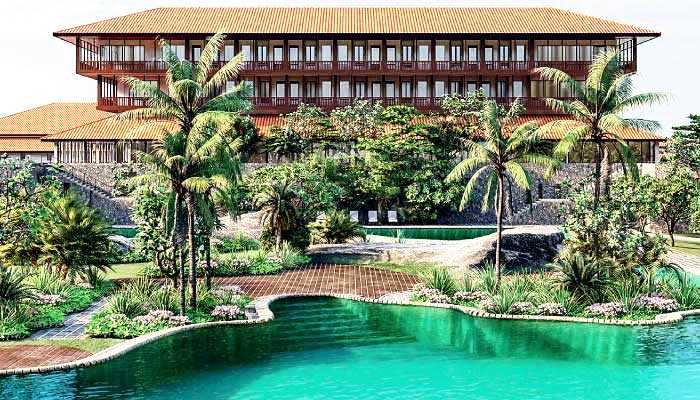
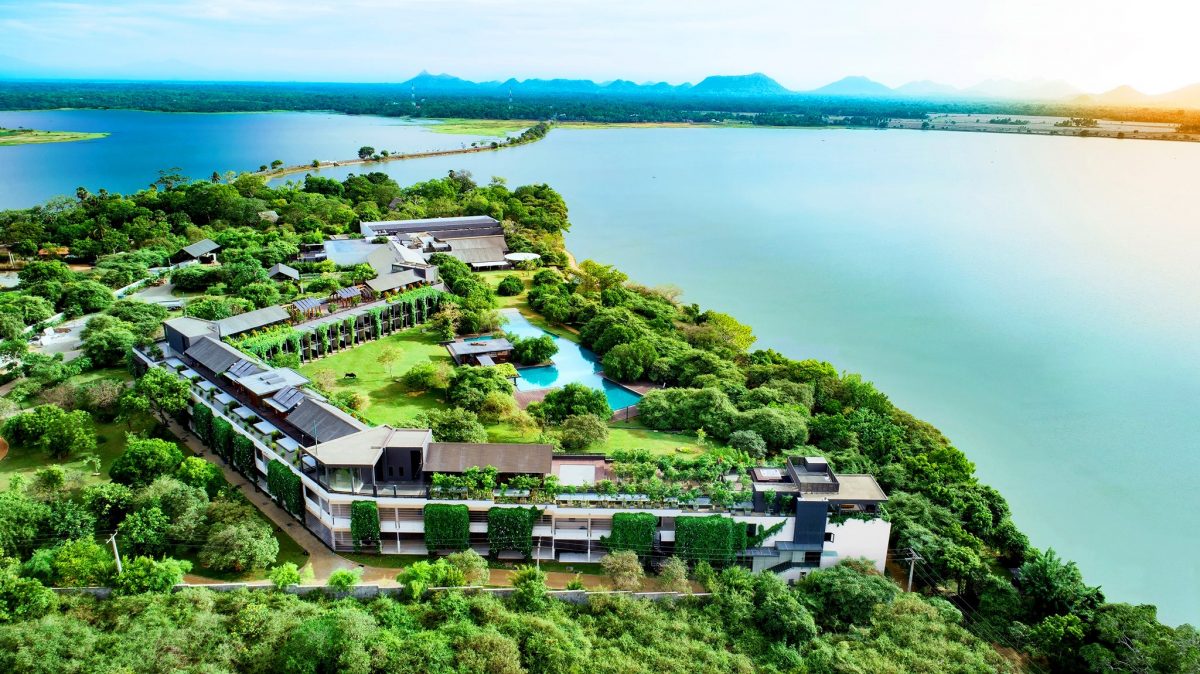
Lakeside property at the heart of the picturesque Weerawila Bird Sanctuary is now the country’s first DoubleTree Hilton
A sanctuary for
business
leisure
cultural tours
Weerawila property enjoys a setting within the lush bird sanctuary, home to over 400 species of birds
Close proximity to major wildlife parks and the cultural centre of Kataragama and affords facilities encompassing nature-inspired design for business, cultural and leisure travellers.
Situated 25 kilometres from Mattala Rajapaksa International Airport on the South coast of Sri Lanka and just half an hour’s drive from Hambantota beach and port.
Easy access to
popular tourist sites
Yala National Park
Bundala National Park
sacred city of Kataragama
Strong Hilton presence coming to Sri Lanka
“DoubleTree by Hilton is one of our fastest growing brands with a presence of more than 600 upscale hotels across 47 countries,” added Shawn McAteer, global brand head of DoubleTree by Hilton. “Over the past decade, the brand has experienced exponential growth, close to quadrupling in size to accommodate the world’s thriving economic and business centres and growing tourism industries. We are delighted to welcome this great new addition to our portfolio, which is ideal for travellers seeking an unrivalled retreat underscored by superior service and hospitality.”
First Hilton resort in Sri Lanka
“We are thrilled to launch our first DoubleTree by Hilton resort in Sri Lanka with the opening of this stunning property, which joins our Hilton portfolio in the country,” said Paul Hutton, vice president of operations in South East Asia for Hilton. “The unique features of the resort, coupled with its location in the heart of Weerawila, makes it a prime choice for domestic and international travellers alike.
“I am confident DoubleTree by Hilton Weerawila Rajawarna Resort will be top of mind for those who are looking for an idyllic getaway while seeking the comfort of a well-recognised hotel brand that consistently delivers service that is authentic, reliable and straight from the heart.”
Lakeside lifestyle facilities
Each of the digital key-enabled guest rooms here comes with a terrace or balcony, a rain shower, Crabtree and Evelyn amenities, and a HDTV with entertainment hub.
The resort’s public areas boast
24-hour fitness centre with 360-degree views
75-metre-long swimming pool
rooftop spa
yoga terrace
The resort offers a range of dining experiences through two restaurants and three bars overlooking Lake Weerawila.
The all-day restaurant, tea lounge and barbecue grill “Spoonbill” offers international cuisine made from local and seasonal produce.
Rooftop, lake-view restaurant “Redshank” specialises in seafood dishes – including Sri Lanka’s celebrated lobster, shrimp and crab.
“Turnstone” is the main indoor-outdoor bar
“Hornbill” provides pool bar and lounge
“Nightjar” is the rooftop cocktail bar
“Lakeside” is the karaoke lounge.
The resort features over 10,000 sq ft of event space, including the 7,788 sq ft Grand Ballroom, which can accommodate up to 600 guests.
All of this event space is equipped with state-of-the-art audio-visual equipment and benefits from floor-to-ceiling windows providing spectacular views over Lake Weerawila.
Our DoubleTree by Hilton Weerawila Rajawarna Resort offers stylish guest rooms and comforting amenities. Enjoy our signature chocolate chip cookie, and know that this welcoming gift is only a taste of the warm, personal service you will experience at DoubleTree by Hilton.