Good instagram sources of information about Sri Lanka


https://www.instagram.com/srilankaislandtours/

Kumudatkh – Russian & English Tour Guide


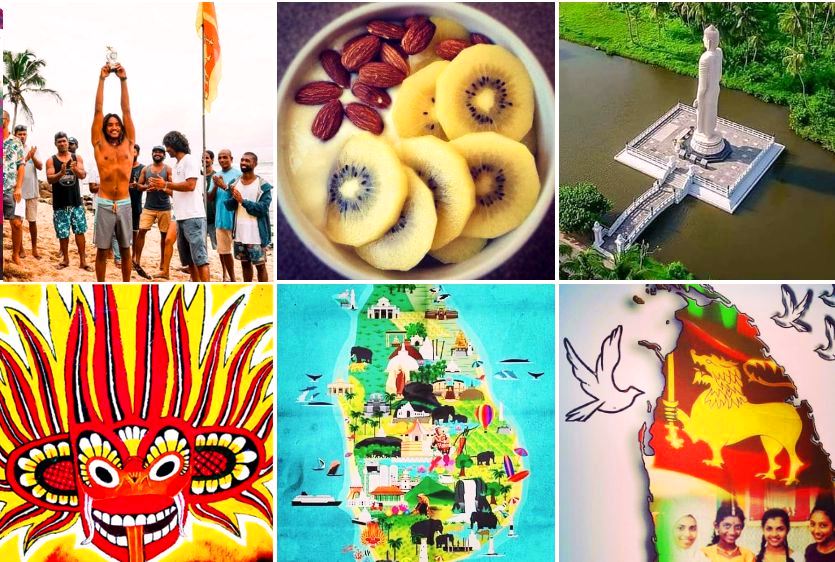
https://www.instagram.com/srilankaislandtours/
Kumudatkh – Russian & English Tour Guide

Nyhuis Travel Adventures

Kande Vihara (Sinhalaː කන්දේ විහාරය) is a major Buddhist temple in Kalutara District, Sri Lanka and is striking by the height of the statue and historical value.
The temple name ‘Kande Vihara’ (Mountain temple) is so called because it is built on top of a hill near the Sri Lankan town of Aluthgama.
The temple was founded by the venerable Karapagala Dewamitta thero arround 1734, under the guidance of the venerable Udugama Chandrasara thero, the chief incumbent of Galapatha Raja Maha Vihara . The temple has been renovated and developed over time to become a major Buddhist shrine in the country, visited by many local and international visitors.
In 1904 the Kshethrarama Pirivena institution of monks became attached to the temple and the pirivena acts as a center for Buddhist education in the country.
The Stupa and the image house, together with the sacred Bodhi tree in its enclosing octagonal shaped wall are considered as very old monuments in the temple.
The Bodhi tree is believed to be more than 300 years old. The large Stupa of the temple which was erected in 1935, has been constructed as enclosing a small sized Stupa, constructed by Ven. Udugama Chandrasara Thero in 1783.
In 2002, a foundation stone for a gigantic Samadhi Buddha statue depicting the Bhoomisparsha Mudra was laid in the temple premises.The statue is 48.8 m (160 ft) in height and considered as one of tallest sitting Buddha statues in the world. The completed statue was open to the public in 2007 and has become most popular and a “must visit” on the tourism trail.
The temple comprises the Stupa, Bodhi Tree, Relic Chamber, Image House, Upulvan Devalaya and the other main Devalas including Kataragama and Pattini Devalaya.
The Bodhi Tree, preaching hall and the Seema Malaka are situated outside the Vihara premises. The Stupa was built within an octagonal Shelter and is bell shaped.
The relic chamber of the temple is believed to be the oldest buildings in the temple premises. At the entrance of the chamber is sculptured with a stone moonstone and a door frame.
Inner walls and the ceiling of the chamber has been adorned with Kandyan Era Frescoes belonging to the latter part of the Kandyan period.
The image house of the temple is consist of an inner chamber and an outer chamber. Entrance to the image house is via the Thorana with three arch shaped entrances.
Three Buddha images in the standing, seated and sleeping postures can be seen inside the inner chamber . The walls and the ceilings of both chambers are decorated with moments of the Buddha’s journey of life, Jataka tales and various types of other interesting murals.


Cafe One Love is a cool bar, located on Ella high street, at the the train station road junction in Ella, Sri Lanka.
It is a great chilled-out spot in Ella. They serve fresh and delicious drinks 24 hours such as cocktails, coffee, smoothies, juices and other spirits.
www.instagram.com/cafeonelove
Phone: +94 71 146 4422


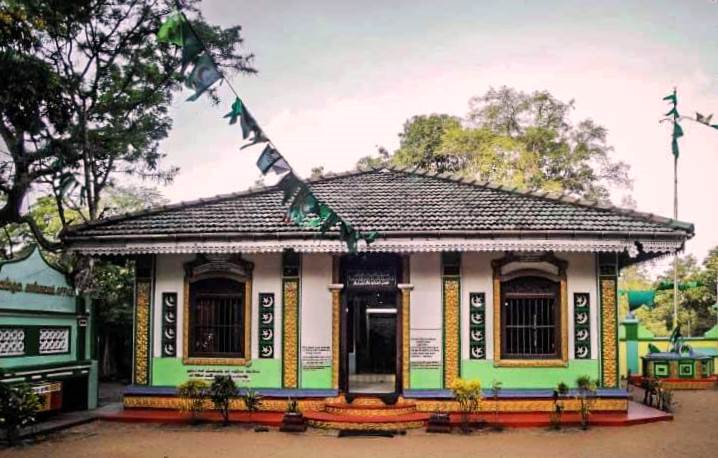
Kataragama Mosque and timeless Shrine
Muslim or Islamic legends about Kataragama are relatively newer. According to Muslims Kataragama is referred to as al-Khidr or land of Khidr. A number of Muslim pious and holy men migrated from India and settled down in the vicinity. The earliest known is one Hayathu, whose simple residence became the mosque. Another called Karima Nabi is believed to have discovered a source of water that when drunk provides immortality.
According to Islamic tradition our forefather Adam (alai) first descended to earth in Serendib (modern Sri Lanka) upon Adam’s Peak. From the very beginning it seems that Serendib was the nearest of all places on earth to heavenly Paradise. And a great deal of this divine endowment is still preserved in Serendib to this day.
Kathirkamam Mosque & Shrine
Islamic Kathirkamam is one of the foremost living examples. Thousands of Muslim pilgrims go there annually. locals and also from distant places far beyond the shores of blessed Serendib.
A simple yet powerful Mosque & Shrine there are intimately associated in quranic and pre-quranic lore with Hazarat Khizr, ‘The Green Man’, identified with the mysterious servant of Allah and holy teacher of prophet Musa (Moses) spoken of in the Holy Quran (Sura Khalf ‘The Cave’), is believed to be the discoverer of the Ma’ul Hayat or Water of Life.
For many years people hold this place in such reverence that a Muslim traversing the wilds in the entire Eastern Province and parts of the Northern Province shuddered to refer to Kataragama by name.
If one were to inquire from another as to where he was going the latter’s answer often was “to the Khizr region”. The surrounding hamlets were listed as places receiving the patronage and blessings of Hazarat Khizr.
Mohammadans of the Village of Hambantota and the nearby villages come in vast numbers to Kataragama in search of a secret subterranean spring, the waters of which, if drunk are said to endow a person with the blessings of perpetual immortality.
The heart of the ‘Khizr region’ of Serendib
Zikr or Remembrance
Originally a humble wattle-and-daub hut, the ‘Khizr Room’ as it was called was occupied by pious recluses who came to live a life of undisturbed prayer and poverty. They were faqirs or ‘impoverished ones’ in the genuine sense of being endowed with the ornament of spiritual poverty.
The holy month of Ramazan represents an exceptional opportunity for believers to please Almighty Allah with offerings of prayer, fasting, charity (zakat), and ‘remembrance’ or zikr.
The Water of Life in other words. Prophet Moses (alai), commanded by God to learn of the higher mysteries from this servant of Allah, found Khizr (alai) ‘at the place where two currents meet and merge into the sea (majma’ul-bahrain). Local tradition maintains that the two currents are the visible Menik Ganga or River of Gems and the hidden or underground current of grace (Tamil: arul) and wisdom that issues from this site on the left bank of the Menik Ganga — al-Khidr’s Fountain of Life.
Even prophet Moses himself, however, could not bear patiently with Khizr’s baffling lessons into the paradoxes of life. With his third failure, Moses was obliged to part company with his strange teacher.
The principal Khizr shrine at Kathirkamam is situated a scant three hundred meters from that of the ancient war god Skanda or Iskandar deified. The two — Iskandar and Khidr — are said to have come together in search of the Fountain of Life; Khizr (alai) alone discovered and tasted the divine elixir. What Iskandar doggedly sought, Khidr found without seeking, they say.
Since the sixteenth century, many mainland Sufis continued to cross by way of Jaffna en route to Kathirkamam.
The old Jaffna pilgrimage route sees many Sufi descendants still carry on the tradition of pilgrimage to Kathirkamam.
Saints
In 1845 Seyed Jabbar Ali Shah came from Bakhara in central Asia to Kathirkamam in response to a divine summons. The saint lived a long life of solitude, prayer, remembrance, and voluntary poverty in Kathirkamam. His mausoleum today is a prominent feature of the sacred premises that are said to contain at least sixty unmarked graves of Muslim pilgrims.
The annual 15-day Kataragama festival in July is a spirited occasion for Muslims. The colourful festival, dating from antiquity, officially begins only with the kodi-yetrum or ritual hoisting of an Islamic flag at the mosque, signifying to Muslims the primacy or preeminent position of Islam.
Kataragama Mosque & Shrine is open to all humble seekers of truth and admits pilgrims of every confession.
Kataragama, it is rightly said, is a place where every pilgrim is respected and people of all religions may mingle openly, sharing freely with others the spiritual food of their respective traditions.
Anticipating a growing stream of Muslim pilgrims to Kataragama, the Mosque & Shrine under the even-handed stewardship of M.H.A. Gaffar of Galle has undertaken an ambitious and well thought-out programme of building restoration and expansion.
Under al-Haj Gaffar’s personal direction, the old mosque has been restored and improved to meet the needs of pilgrims while also preserving and protecting the sacred character of the site. A separate Muslim pilgrims’ rest house with spacious facilities is also under construction in the New Town with the support of many Muslim donors.
+++++++++++++++++++++++
+++++++++++++++++++++
tradition, Kataragama is Khidr-gama, the home of al-Khidr, ‘The Green Man’. We call him al-Khidr, because he is always fresh and young and green, like tender grass. Everywhere al-Khidr goes, that place is fresh and green, like Kataragama, which is cool and green in the midst of dry, hot jungle.
At Kataragama, the Khidr Shrine is open to all, Muslim believers and non-believers alike. Everone is welcome to come and experience the peace and sanctity of this shrine, which is like no other.
Visitors to the Mosque & Shrine have included Presidents, Prime Ministers, Ministers and foreign dignitaries. Every year international photographers and television crews come to document the Shrine’s traditions.
Many saints and awliya have visited and prayed here, including Hayat Nabi, al-Khidr himself.
The Dambana Veddas always visit during Esala
Muslims who visit Kataragama have opportunity to deepen their faith through association with religious-minded people of all faiths. Those people of other faiths also benefit.
Tradition says that Kataragama, or Khidr-gama, is the place where Hayat Nabi found and tasted the Water of Life that gave him knowledge coming from Allah Almighty.
Kataragama is one of only few places in the world do people of three religions worship together. Kataragama belongs to all the people of the world, not only to Sri Lankans.
Kataragama is renowned among pious Muslims the world over as Khidr-gama, ‘the home of al-Khidr’. In Islamic lore, al-Khidr ‘the Green Man’ was the companion of Alexander the Great who discovered the ma’ul hayat or Water of Life.
Al-Khidr will live until the end of the world and whatever place he visits remains fresh and green. He is also known as Hayat Nabi ‘the living prophet’.
During the Esala Festival, Maulood is recited in the name of Hayat Nabi (Khidr alai) every morning. The final Thamam recital after which Buddhists and Hindus celebrate the Water-cutting Ceremony at the Menik Ganga. Following Thamam, a great feast is offered and the flag is lowered to end the festival.
Throughout the Esala festival, bawas or faqirs of the Refai Sufi Order perform Ratheeb ceremony every evening at the Mosque. The dramatic ritual of self-mortification in the Name of Allah attracts hundreds of Muslims and non-Muslims.
“Muslims call him Hayat Nabi,” al-Haj Gaffar told the assembled crowd. “To Hindus he is Murugan. Buddhists call him Kataragama Deviyo.”

Mandara Rosen Kataragama is a four star hotel property providing a full guest experience whilst being centrally placed to visit some of the most important places in and around Kataragama.


Nestled in the heart of Kataragama and surrounded by its beauty, the views offered from our rooms are nothing short of breathtaking. The earthy tones of the rooms, the Kandyan paintings and the rich mahogany furniture add to this enchanting atmosphere. The palatial beds are fitted with soft cotton sheets that are cool and crisp to the touch. The spacious bathrooms include a large bathtub and a commodious counter for your comfort.
Located deep in the South of Sri Lanka, at the foot hills of the famous ‘Wedahiti Kanda’ Hill, Mandara Rosen Kataragama is a perfect holiday resort offering a total of 58 sumptuous rooms, tastefully designed to ensure that every guest is well and truly pampered. The location, ambience and impeccable service at the hotel promises the discerning traveller a unique travel experience where privacy and intimacy is guaranteed.


As you enter the lobby of Mandara Rosen Kataragama, you will be struck by the grandeur of this magnificent hotel. The opulent décor, the soaring ceilings and the grand staircase, all contribute to the impressive entrance. The staff at the reception desk will greet you warmly and you will be checked in with ease.
After a refreshing drink, the hotel staff guides you to your room, you will be impressed by the spaciousness of the corridors and the impeccable attention to detail in every aspect of the hotel. The earthy tones, combined with the rich mahogany furniture, create an inviting atmosphere that is both warm and welcoming.


Accommodation at Mandara Rosen Kataragama steps you into an extraordinary world of old fashioned customs and modern convenience so that you enjoy uninterrupted, luxurious peace
The rooms at Mandara Rosen Kataragama are a masterpiece of design, comfort and elegance. The Twin Deluxe Rooms and Double Deluxe Rooms are extremely spacious and comfortable, featuring everything you need for a perfect stay. The large windows offer stunning views of the surrounding countryside and let in plenty of natural light.
Options at Mandara Rosen consist of:
Twin Deluxe Rooms 42
Double Deluxe Rooms 16
Suites 02

The Suites are the pinnacle of luxury, offering all the amenities you would expect from a world-class hotel. The private sitting areas are perfect for relaxing in privacy, while the spacious bathrooms are a sanctuary for indulging in some much-needed pampering.
The two extravagantly-furnished and tastefully laid-out suites for guests to relax and unwind in luxury. Each suite features a private sitting area of over 100 sq.ft. as well as a spacious pantry area and two separate bathrooms.
The pool area at Mandara Rosen Kataragama is simply stunning. The enormous swimming pool with underwater music is perfect for a refreshing swim or just lounging around with a book. The poolside bar offers a great selection of cocktails and mocktails, making it the perfect spot to unwind and relax.


The restaurant at Mandara Rosen Kataragama is a true delight for the senses. The ambiance is second to none, with elegant furnishings and soft lighting creating a warm and inviting atmosphere. The menu offers a great selection of local and international cuisine, all expertly prepared by the talented chefs.
The breakfast buffet is a highlight of any stay at Mandara Rosen Kataragama. The extensive selection of fresh fruits, juices, cereals, breads, and pastries is sure to satisfy even the most discerning of tastes. The hot dishes are cooked to perfection and the coffee is always freshly brewed.


There are a multitude of activities and tours in the surrounding area, historical, religious and wildlife safari parks. The tours in the jungle and on the lakes are highly recommended. Mandara Rosen is a first class hotel in Kataragama Sri Lanka, ideally suited to visit the temples and mosques in this important historical area on the South Coast of Sri Lanka. One of the major highlights of staying at Mandara Rosen Kataragama is this ideal location. The hotel is situated in the heart of Kataragama, offering easy access to all the major attractions in the area. The sacred jungle shrine of Kataragama is just five minutes away, while several ancient Buddhist temples and an archeological museum are also located nearby.
Located 40 minutes from Mattala International Airport or 4 hours from Colombo airport the journey is via new highways in either case and pases by some wonderful scenary.
For wildlife enthusiasts, the national parks in close proximity to the hotel offer the chance to see all the land animals out of the big five, including leopard, elephant, and sloth bear. The ancient reservoirs in the area attract many species of water birds, making it a birdwatcher’s paradise.
The hotel enjoys exceptionally spacious rooms, its enormous swimming pool with underwater music as well as a host of several other facilities and amenities. The restaurant and food is second to none in both ambiance and quality.
The history of Kataragama dates back to the ancient Ruhunu Kingdom of the 2nd century BC and the hotel is situated centrally to explore and enjoy.
The sacred jungle shrine of Kataragama, a pilgrimage site that has great religious and historical significance, is located just five minutes away from Mandara Rosen Kataragama.
Hindus, Buddhists, Muslims and Christians make visit to the sacred jungle shrines. Originally built by the warrior King Dutugemunu in the 2nd century B.C. to pay homage to God Kataragama.
Ancient reservoirs attract many species of water birds including cormorant, purple heron, caspian tern and the painted stork.
Several ancient Buddhist temples are nearby as well as an archeological Museum that provides a glimpse into the ancient Ruhunu Kingdom.
National parks well known for witnessing all land animals out from big five (Leopard,Elephant,Sloth Bear) in a single safari is situated in close proximity.
Your stay at Mandara Rosen Kataragama will be an unforgettable experience. From the luxurious accommodations to the impeccable service, everything is designed to ensure that your stay is both relaxing and memorable. Whether you are looking for a romantic getaway or a family vacation, Mandara Rosen Kataragama is the perfect choice.
The hotel team from the GM to all the staff welcome you for a great experience.
So why wait? Book your stay today and experience the magic of Sri Lanka in style!

You know you’re from Sri Lanka when you measure the size of a block of land in perches, not square metres (or acres, for that matter). So, if you’re new to Sri Lanka and somewhat baffled by all this perch land measurement, here is a guide and some quick and easy conversions for you:
however, 1 acre = 160 perches, os in old money, a farmers allotment of 4 perch by 40 perch, good for arable agriculture.

A square perch (often shortened to just a perch) is a unit of measurement and is equal to 25.29285264 square metres.
Confusingly, a perch (not the squared variety) is also called a rod or pole because it’s based on a surveyor’s tool measuring exactly 5½ yards or 16½ feet or ¼ of a surveyor’s chain.
The perch or rod was helpful tool and measurement for a surveyor because it could be used to create a ‘perfect’ acre of 40 perches by 4 perches – remember 160 perches equals an acre.
A number of different units of measurement were used in Sri Lanka to measure quantities like length, mass and capacity from very ancient times. Under the British Empire, imperial units became the official units of measurement and remained so until Sri Lanka adopted the metric system in the 1970s.
Various units were used in Sri Lanka at different times and some only in certain regions. Some of these remained in use well into the colonial period. The following is only a partial list.

One cubit was equal to 0.464 m (18.5 in). The Bam̆ba (Fathom), still in use as of 2016, is the distance between a man’s outstretched arms. It is roughly 6 feet in length. “Bam̆ba” is usually used to measure depth in wells and pits. Units used in measuring long distances included the “Gavuva”, “Yoduna”, and “Usaba” (plurals Gavu and Yodun – a Yoduna was 4 Gavu) and the “hoo kiyana dura”, which was the audible distance of a shout of ‘hoo’ by a person. Base of these system of measuring length was the human body.
King Nisshankamalla have established milestones called “Gaavutha Kanu” from a Gavu to another. Two of such have been found in Katugahagalge and Valigaththa in Southern Province.
The smallest unit was known as “Paramaanuwa”, which was equal to 3.306×10¹¹ m (1.302×10⁹ in). A typical span was taken roughly equal to 22.86 cm (9 in). These small units of measurement were used in making of statues and buildings. Following are the relationships between the units used in ancient times.
| Smaller Unit | = | Large Unit | Approximately Equivalent Metric amount |
|---|---|---|---|
| 1 Paramaanuwa | 3.30667×10⁻⁸ mm (1.30184×10⁻⁹ in) | ||
| 36 Paramaanu | = | 1 Anu | 1.1904×10⁻⁶ mm (4.68662×10⁻⁸ in) |
| 36 Anu | = | 1 Thajjaari | 4.28544×10⁻⁵ mm (0.000001 in) |
| 36 Thajjaari | = | 1 Ratharenu | 0.00154 mm (0.00006 in) |
| 36 Ratharenu | = | 1 Likkha | 0.05554 mm (0.00219 in) |
| 7 Likkha | = | 1 Ukha | 0.38878 mm (0.01531 in) |
| 7 Ukha | = | 1 Dhannamaasa | 2.72143 mm (0.10714 in) |
| 7 Dhannamaasa | = | 1 Aangula | 19.05 mm (0.75 in) |
| 7 Aangula | = | 1 Viyatha (Span) | 228.6 mm (9 in) |
| 2 Viyatha | = | 1 Riyana (cubit) | 457.2 mm (18 in) |
| 7 Riyana | = | 1 Yatthi | 3200.4 mm, 3.2004 m (126 in, 10.5 ft) |
| 4 Yatthi | = | 1 Abbhantara | 12.8 m {42 ft) |
| 5 Abbhantara | = | 1 Usabha | 64 m (210 ft) |
| 10 Usabha | = | 1 Gavuva | 640 m (2100 ft) |
| 4 Gavuva | = | 1 Yoduna | 2560 m (8400 ft) |
Measurements of area used in ancient Sri Lanka was a system derived from paddy agriculture. Area was often measured in terms of the land that could be sown with a specific amount of seed or rice, including the Pǣla, Amuna, Kiriya (4 amunas), and the Riyana. In one region, a Kiriya was about 8 acres. Following are relationships between some typical measures of area.

| Smaller Unit | = | Larger Unit | Approximately Equivalent Metric amount |
|---|---|---|---|
| 1 Laaha | 4.59870 m2 (0.00114 acres) | ||
| 40 Laaha | = | 1 Pǣla | 183.94802 m2 (0.045455 acres) |
| 12 Pǣla | = | 12 Kuruni | 2207.37623 m2 (0.54545 acres) |
| 44 Kuruni | = | 1 Amuna | 8093.71 m2 (2 acres) |
| 1 Amuna | = | 25 Kareesa | 3237.49 m2 (0.8 acres) |
| 4 Amuna | = | 1 Kiriya | 32374.9 m2 (8 acres) |
In a stone inscription written by King Bhathikabhaya Abhaya at Dunumadalakanda in Anuradhapura District, it is stated that he offered a land of 1 Kareesa to a temple in the area. In another stone inscription written by King Kutakannabhaya Thissa at Horiwila in Anuradhapura District, it is stated that he offered a land of 8 Kareesa to a temple named ‘Thissa’ in the area.
James Prinsep, writing in 1840, stated that “at … Ceylon … English measures only are used, or at least a cubit based on the English measure of 18 inches.

Badulla Pillar Inscription, in which prohibition of frauds in weighing is stated

Madatiya ( Adenanthera pavonina ), which was a base unit used to measure small weights.
One candy, or one bahar, was equal to 226.8 kg, or 500 lbs, or according to The Indian Trader’s Guide 480 Dutch pounds or 520 pounds Avoirdupois. Small weights could be measured in seeds, such as the Thala (Sesame), Amu, Vee (Rice) (3 Amu), Madati (8 Vee), Majadi, Maditi, Kalanda, and Manjadi. In ancient times, there have been an accurate system to measure weights. Following are some such weight measuring units used. Units like Madati ( Adenanthera pavonina ), Vee (Rice) are based on weights of those seeds.
It is stated that frauds in weighing was a punishable offence and only weights approved by the government should be used in weighing, in Sorabora Wewa Pillar Inscription (Badulla Pillar Inscription) which was written by King Udaya IV.
| Smaller Unit | = | Larger Unit |
|---|---|---|
| 4 Veeha | = | 1 Gunja |
| 2 Gunja | = | 1 Maasaka |
| 2+1⁄2 Maasaka | = | 1 Aka |
| 8 Aka | = | 1 Dharana |
| 5 Dharana | = | 1 Swarna |
| 2 Swarna | = | 1 Pala |
Different units were used for liquid and dry capacity.
One seer was equal to 1.2 quarts and one parrah was equal to 6.75 gallons. Another source suggests that a seer was equal to 1.86 imperial pints or 1.06 litres. These were mostly introduced in the period which coastal areas were governed by Portuguese and Dutch.
Units to measure dry capacities were mainly used in agriculture. Some of them are as following:
| Smaller Unit | = | Large Unit |
|---|---|---|
| 2 Patha / Koththu / Hundu | = | 1 Mana |
| 2 Mana | = | 1 Seru |
| 1 Seru | = | 1 Bandara Naliya (Royally accepted base unit) / 1 Naliya |
| 2 Seru | = | 1 Serika |
| 2 Serika | = | 1 Laha / Yala / Kuruni * |
| 2 Laha / Yala / Kuruni * | = | 1 Marikkala |
| 2 Marikkala | = | 1 Thimba |
| 2 Thimba | = | 1 Busala |
| 5 Laha / Yala / Kuruni * | = | 1 Bera |
| 2 Bera | = | 1 Pala |
| 4 Pala | = | 1 Amuna |
* capacity of Kuruni varies from area to area
One ammonam was equal to 203.4 L. One parrah = 1⁄8 ammonam, oneseer = 1⁄288 ammonam and the chundoo was equal to nearly half a pint.
Maccauly stated in 1818 that to the north of Colombo an Ammonam contained 16 Parahs, and 2+1⁄2 Ammonams equalled one Acre, but that to the south there were 8 Parahs to the Ammonam. He describes the Parah as a measure 16.7 inches wide and 5.6 inches deep.
Montgomery, writing in 1835, described the interior measurement of a Parrah as a perfect cube of 11.571 inches, and the seer as a cylinder of depth 4.35 inches and diameter 4.35 inches.


Galle Fort is a ancient stone fort built to protect the coastal city of Galle, in the southern province of Sri Lanka. The fort was built hundreds of years ago and the walls are made of stone and brick. You can pass your time walking along the old battlement walls, every corner give a unique and interesting experience.


The present lighthouse is made of stone, some of the stonework was shipped from England and Scotland to make the structure.
The Galle Lighthouse, also known as Pointe de Galle Light, is an onshore lighthouse in Galle, Sri Lanka and is operated by Sri Lanka Ports Authority. This is Sri Lanka’s oldest light station.
Philippus Baldaeus, a Dutch minister detailed Galle Harbour stated in the 1950s, that there was an iron cannon placed on the ramparts and a lantern to guide the sailors on top of the 28 feet above sea level rock which jutted out into the sea.
The first lighthouse at Galle was built by the British in 1848. It was a 24.4 m-high (80 ft) iron lighthouse, onstructed from cast-iron plates, imported from England, designed by British architect Alexander Gordon and erected by Messrs. Robinson, Engineers of Pimlico.
The lighthouse, painted white, was located on the southwest bastion (the Utrecht Bastion) of Galle Fort on the western side of Galle Harbor. It had a fixed point light with prolate reflectors, which was visible for 19 km (12 mi). In July 1936 it was destroyed by fire.
The current 26.5 m-high (87 ft) concrete lighthouse was erected by the British about 100 m (330 ft) from the original site in 1939.
The light was originally fitted with a glass prism lens floating in a bath of mercury (to reduce friction) and was powered by a weight driven machine, which is still in the lighthouse, but has been replaced by a modern LED light.
The light station is within the walls of the ancient Galle Fort, a UNESCO World Heritage Site and well known tourist attraction.
The lighthouse is strategically located at the southern end of the promontory, built approximately 6 m (20 ft) above the road level on the ramparts, at what is known as the Point Utrecht Bastion, giving it full view of any ships entering Galle Harbour.

It is a UNESCO World Heritage site and considered to be one of the best preserved fortifications in Asia. Built by the Portuguese in the 16th century, the fort was later expanded by the Dutch in the 17th century.
The fort encompasses the old town of Galle, and contains a number of historical buildings, including churches, museums, and colonial-style homes.
It is now a popular tourist destination, known for its well-preserved colonial architecture, rich history, and beautiful views of the Indian Ocean.


Galle Fort has several attractions, including:
Here are some of the popular foods to eat in Galle Fort:
Here are some popular restaurants in Galle Fort that people recommend:


Sri Lanka offers delicious and diverse foods which are renowned worldwide. The cuisine is a blend of Asian, Chinese, and Dutch influences, with an emphasis on fresh local seafood, spices grown on the island, and coconut milk.
Popular dishes include curries, hoppers (a type of fermented rice and coconut batter pancake), dhal (lentil curry), and coconut sambol (spicy relish condiments).
The food is also known for being healthy and flavorful. Some visitors may find it a little too spicy on the first tasting, however son you will love the vibrant flavours. It is recommended to try street food for local and authentic dishes – choose a vender that is selling hot and freshly cooked foods to locals!
Many people also enjoy traditional Sri Lankan breakfast items such as hoppers (a type of rice and coconut milk-based pancake) and string hoppers (a type of steamed rice noodle).
Most visitors find the food in Sri Lanka to be delicious and diverse. The cuisine is influenced by Indian and South Asian flavors, with a mix of spices and herbs used in traditional dishes such as dhal, curry, and rice.
Seafood is also a popular choice, as Sri Lanka has a long coastline and a rich fishing tradition.
Sri Lankan food is also known for its tropical fruits and vegetables, which add freshness and nutrition to meals.
Overall, the food in Sri Lanka can be considered good and worth trying for those who enjoy spicy and flavorful dishes.
However, opinions on the food may vary from person to person. Some people may find it too spicy or a little oily, while others may enjoy the bold flavors and variety of dishes. It is always recommended to try a variety of dishes and street food to get a better idea of the local cuisine.
You can try your hand at making this traditional “Cashew and Coconut Curry”
Ingredients:
1 cup of cashews
1 cup of coconut milk
1 onion, chopped
2 cloves of garlic, minced
1 tablespoon of ginger, minced
1 teaspoon of turmeric powder
1 teaspoon of cumin powder
1 teaspoon of coriander powder
1 teaspoon of red chili powder
1 teaspoon of mustard seeds
1 teaspoon of cumin seeds
Salt to taste
Oil for cooking
Instructions:
In a pan, heat some oil and add the mustard seeds and cumin seeds. Cook for a few seconds until they start to crackle.
Add the chopped onion, minced garlic and ginger, and sauté until the onions are translucent.
Add the turmeric powder, cumin powder, coriander powder and red chili powder. Cook for a few minutes until the spices are fragrant.
Add the cashews and mix well.
Pour in the coconut milk and bring the curry to a boil.
Reduce the heat to low and let the curry simmer for about 10 minutes, or until the cashews are cooked through and the curry is thickened.
Season with salt to taste.
Serve the Sri Lanka Coconut Cashew Curry with steamed rice or roti. Enjoy!


A very pleasant young man who speaks good English and has good knowledge of the island.


Experienced driver and knows how to look after a guest properly.


Starting from Ella – one day – USD55 per person
Udawalawa Elephant Orphanage
Ravana waterfalls
Monkey feeding
9 Arch Railway Bridge
Little Adams Peak hike
Tea Plantation & Factory visit
Tea & Cake cafe
Train ride
Includes Transport with English speaking guide and tickets
Starting in Galle – one day – USD 45 per person
Elephant riding – Bentota
Bentota River Boat Safari
Turtle Farm
Moon Stone Mine
Spice Garden
Galle Dutch Fort walk
Buddhist Peace Temple – Unawatuna
Includes Transport with English speaking guide and tickets
Starting in Kandy and Ambuluwawa Lookout Tower – One day – USD 145 per person
Elephant Riding Pinavala
Spice Garden
Tea factory and Tea Garden
Royal Botanical Garden
Temple of the Tooth
Ambuluwawa Lookout Tower
Feeding Monkey
Includes Transport with English speaking guide and tickets


